
US says Witkoff, Kushner had positive talks in Doha on Iran
11:55
| Home page World |

|
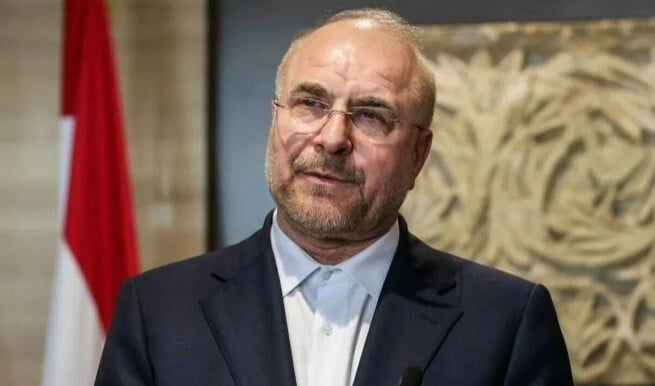
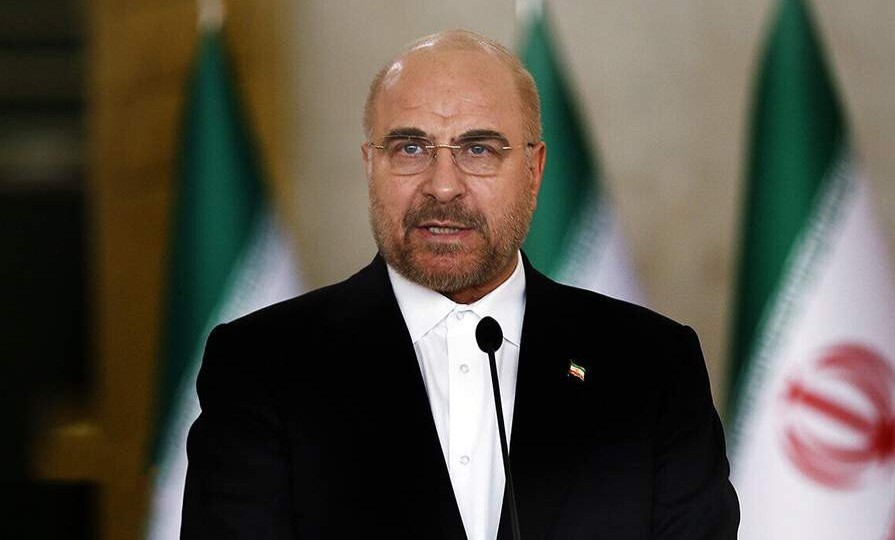
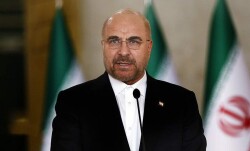
The head of Iran's negotiating team, Mohammad Bagher Ghalibaf, said the memorandum explicitly states that passage through the Strait without charges will only be free for 60 days, stressing that Iran will under no circumstances relinquish its rights in the Strait of Hormuz because "these are our territorial waters."
Axar.az reports that according to IRNA, he said in a televised interview Tuesday night that Iran will not move to the next phase of implementing the remaining provisions of the memorandum until all five key clauses have been fully secured and finalized.
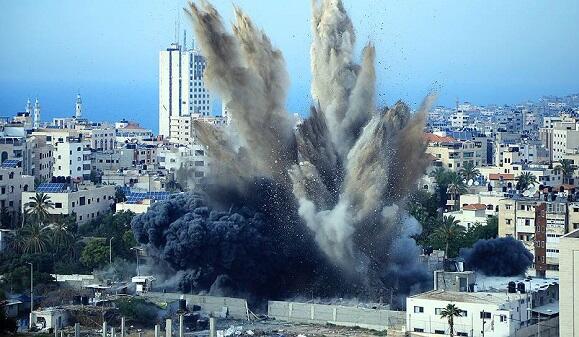
The speaker of Parliament said the first clause of the memorandum explicitly states that Lebanon's territorial sovereignty, based on its officially recognized geographical boundaries, must be the primary principle. This means the war must end, all military operations must cease, and people must be able to return to their homes. Under the agreement, the enemy, which had occupied parts of Lebanese territory and in effect continued the war under the cover of a ceasefire, must withdraw.
Ghalibaf said Iran must continue pursuing both the talks and what he described as "this memorandum, which is a source of national pride."
He said Clause 14 states that the memorandum must ultimately be approved by the UN Security Council, but questioned what guarantees such approval would provide.
"Didn't Mr. Trump tear up and ignore a UN resolution in 2017? Yet the United Nations did not even issue a statement condemning that blatant violation."
He said Iran's only genuine guarantee is its own domestic strength.
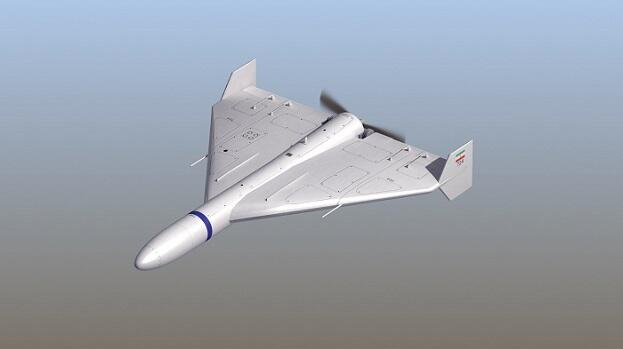
"Our offensive capabilities and missile program are absolutely non-negotiable," he said.
He also said there will be no negotiations with any party regarding the resistance front and its affiliated groups.
"At one time, our enemies sought to overthrow and deny the resistance front," he said.
On the nuclear issue, Ghalibaf said Iran remains committed to the regulations of the International Atomic Energy Agency (IAEA) and its obligations under the Treaty on the Non-Proliferation of Nuclear Weapons (NPT), while insisting that uranium enrichment is Iran's undeniable right.
Ghalibaf said Iran agreed that passage through the Strait of Hormuz would remain free of charges for only 60 days, at the request of Persian Gulf coastal states, because some vessels had been stranded after the war began and the strait was closed.
He said Iran has committed to restoring technical conditions in the Strait—including safety measures and mine clearance—to their pre-war status within 30 days, while refraining from charging fees during the 60-day period.
Ghalibaf added that Clause 5 of the memorandum states that Iran and Oman will determine the future administration and maritime services in the Strait of Hormuz in accordance with international law and the sovereign rights of the coastal states.
"In other words, sovereignty over the Strait of Hormuz belongs to Iran and Oman," he said.
He stressed that Iran will never retreat from this position.
"These are our territorial waters, and we will not allow the United States to create controversy or falsely claim that Iran has militarized the Strait of Hormuz."
Ghalibaf said the negotiations were initially scheduled to last 60 days to cover all 14 clauses of the memorandum, although both sides may agree to extend them.
He said the talks will continue in 60-day extensions until a final agreement is reached that removes all sanctions—primary and secondary—including those imposed through the UN Security Council, the IAEA Board of Governors, the U.S. Congress and U.S. presidential executive orders.


|
Date
2026.07.01 / 10:54
|
Author
Axar.az
|