





Meloni thanks Aliyev as IP limits fuel prices in Italy
00:39
| Home page Health |

|
Testing for cancer in blood, urine or even saliva: That approach has been called the "holy grail" for diagnosing the second leading cause of death in the world, and it has been fueling an area of research that continues to raise eyebrows and questions.
Axar.az reports citing CNN.
Doctors can diagnosis cancers in a number of ways, including taking biopsies of tissue where a suspected tumor might be; imaging tests such as X-rays, ultrasounds or MRIs; and screening tests such as endoscopies or colonoscopies.
Yet some of those approaches can be uncomfortable for patients or may come with hefty medical bills, among other potential downsides.
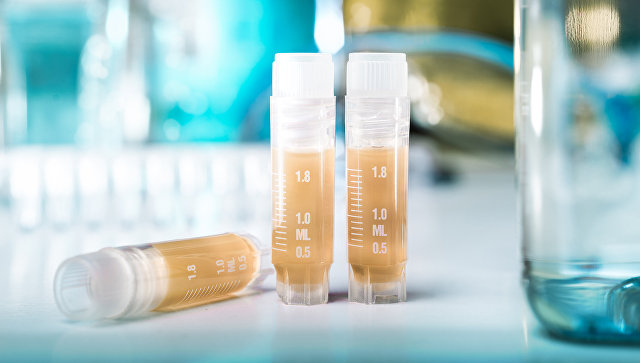
For the future, many cancer researchers are exploring whether a cancer test could involve only collecting and analyzing a sample of your blood, saliva or urine so that it's noninvasive, cheaper and more appealing to patients -- especially when trying to diagnose cancer early.
These bodily fluids or liquid biopsies "have the potential to help clinicians screen for disease, stratify patients to the best treatment, and monitor treatment response and development of resistance," the American Association for Cancer Research says.
The science behind detecting signs of cancer in liquid biopsies -- and how that could change the patient experience and public health as a whole -- remains in the early, experimental stages but has spurred some excitement.
Audience members whispered amongst themselves in a crowded conference room at the Georgia World Congress Center in Atlanta on Tuesday during the American Association for Cancer Research annual meeting, where cancer researchers and other medical professionals gathered to watch a panel of scientists present the latest data on using liquid biopsies to detect cancer.
Some attendees held their phones in the air to take photos of the presentation.
If liquid biopsies help detect cancer early, that would be beneficial -- as the earlier cancer is detected, the better chances of survival -- but much more research is needed, said Nickolas Papadopoulos, a professor of oncology and pathology at the Johns Hopkins Kimmel Cancer Center in Baltimore, who presented as part of that panel.
With detection, "it's a difference of thinking proactively rather than reactively to this disease," he said.


|
Date
2019.04.05 / 17:21
|
Author
Axar.az
|