





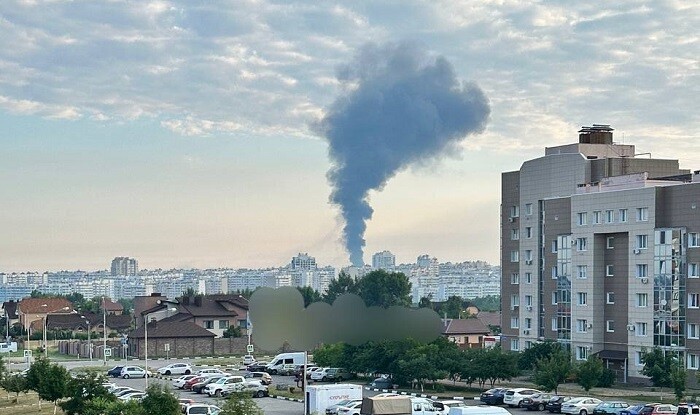
Fire breaks out at Russian oil depot - Photo
14:57
| Home page Society |

|
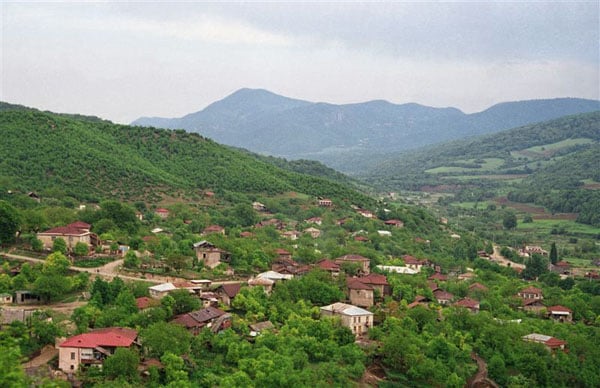
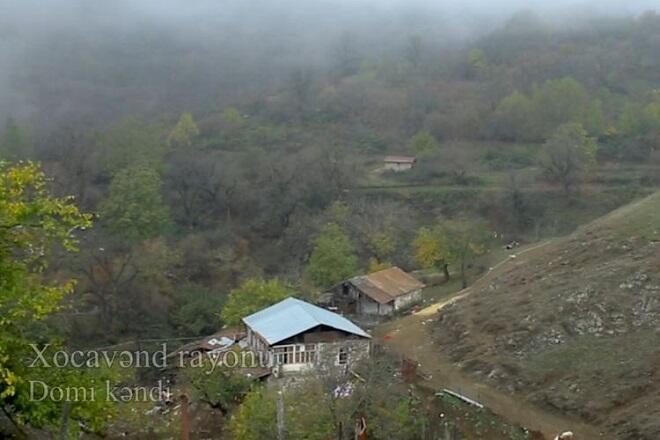
Armenian troops occupied the Khojavand region of Azerbaijan on 2 October 1992.
Axar.az reports that the Khojavand region was established on the basis of Martuni and Hadrut administrative regions after the Nagorno-Karabakh Autonomous Region was abolished in 1991. The Khojavand city, two large settlements, Girmizi Bazar, Hadrut, and 83 villages are located in the region.
According to the news service for the Ministry of Ecology and Natural Resources, in Khojavand there are lime fields of 989,000 tons of underground water with the predicted reserve of 90,000 cubic meters daily.
More than 100 residents of Khojavand died in the battles with Armenian troops during the invasion. After the occupation, Armenians destroyed the region’s gorgeous natural environment and plundered its natural recourses. 25,500 hectares were cut in Khojavand while oak trees were exported to Armenia and the forest around Khojash was terminated.
Near the Gyrmyzy (Red) Bazaar settlement, there were two samples of plane tree of 600 cm in diameter and 25 m in height, preserved as natural monuments. They were at the age of 1000 and 2000 years, while in Garakand village there was the forest reserve of 0.5 hectares with trees included into the Red Book and representing the tertiary period relict. In Khojavand, the forests of 25.5 hectares dominated by oaks were cut by Armenian occupants.
According to the center of the Ministry of Ecology and Natural Resources for observing the state of natural resources and environment, narcotic containing cultures are planted in the occupied lands of Khojavand, with arsons committed periodically, causing an irreparable damage to flora and fauna, as well as the monuments of those places.
According to the center evaluating the damage inflicted to the environment and natural resources in Azerbaijan’s occupied territories, drugs planted in Khojavand are being delivered to a number of countries and the flora and fauna of the region have been eradicated. Trees have been felled and transported to Armenia and other countries as timber for construction.
Prior to the occupation, the region had many historical-archaeological and architectural monuments, including the ancient Azykh Cave, dating back almost 1.2 million years B.C., fortresses from the first to eighth centuries, an Albanian Temple from the 10th century, and the 13th century turbeh among others.


|
Date
2017.10.02 / 11:30
|
Author
Axar.az
|