










Azerbaijani gymnast wins World Cup gold in Germany
20:32
| Home page Culture |

|
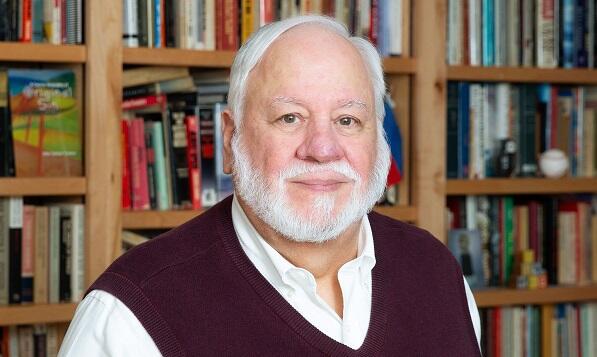
Axar.az presents an article, "Zone of Interest" by John Samuel Tieman.
“Zone Of Interest” is almost bucolic. It begins with a picnic in the countryside. There's a family beside a lovely river. Mom. Dad. Five kids. Because of the dad's haircut, there's a hint he might be in the military. Then they go home. Their home is large and oddly uninviting. The viewer enters more out of curiosity than any embracing warmth. There's a large garden. And, to one side of the garden, a high wall topped with barbed wire. There are barracks on the other side of that wall. And a guard tower. In almost every scene, there is a low drone, which now and then mixes with screams, dog barks and gunshots. We soon realize that the drone is the sound of crematoria. Because that's Auschwitz. They live next door to Auschwitz. The husband, played by Christian Friedel, is the camp commandant Rudolf Höss. His wife, Hedwig, is played by Sandra Hüller.
This was the third time my wife and I have seen the movie. As I went into this viewing, I thought about willful denial. I came away from this viewing thinking that there is a lot that is willful, but there is little denial. These Nazis know what they are doing. They work to escape the pain they cause their victims and themselves. They comfort themselves. They literally put a wall between their home and the pain. But they know what they are doing.
Early in the movie, Hedwig comes to possess a full-length mink coat. She's gotten it from a prisoner. It's worth noting that today such a coat could cost $100,000 for a designer mink. She speaks of finding a diamond hidden in a toothpaste tube. Thus has she gone from working class to wealth because she benefits from the Holocaust. The commandant is a leading figure in the SS, a lieutenant colonel destined for promotion. He has access to the highest echelons of the party, including Heinrich Himmler, Martin Bormann, even Adolf Hitler. And yet, near the end of the movie, his work makes him nauseous. But this is a man who knows exactly what he is doing. Not unlike Americans today.
There is a curious juxtaposition: this rather ordinary family life and the violence we never see. Everyone knows what goes on just over the wall. That's the point. Often in circumstances like these, folks talk about willful denial. I agree with the willful bit. But I think we have to reconsider that denial part. This family creates a lot of pain and death, and, at the same time, they want to shield themselves from all the suffering they cause. Not unlike the United States today. Which is why this movie is important. We Americans live in an age in which cruelty has become public policy.
Think of how we treat immigrants. As of this writing, this the 30th day of March, the total number of deportations during Pres. Trump's second term is 207,128. Daily deportations average 43. Total arrests are 672,650. Daily arrests average 65. Total detentions are 582,563. We've seen people beaten. We've seen people killed. We can't deny that this is policy because we can't deny that this is done publicly. The Trump administration has a goal of 3,000 arrests of immigrants daily, which was publicly confirmed by White House Deputy Chief Of Staff Stephen Miller.
We're not unlike the camp commandant and his wife. We know what is on the other side of the wall. Some of us are like the commandant. We see it. Some of us are like the wife. We know of it. But, one way or the other, we all know. The evidence is everywhere.
My wife said something so simple the day before yesterday. While listening to the national news, my beloved observed this about the MAGA agenda. "The injury to the country is both moral and aesthetic. It's a crueler country now. And it's uglier." I keep thinking of the White House. And the house of the commandant and his wife. The president has made the Executive Mansion gaudy. It displays an inner harshness. In “The Zone Of Interest”, the home is not particularly attractive. There's hardly any art on the walls, no bookshelves, nothing aesthetically pleasing. Like Donald Trump, the injuries to the commandant and his wife are moral, and the evidence is aesthetic.


|
Date
2026.04.06 / 09:52
|
Author
Axar.az
|