



Nations League second-round matches conclude
01:03
| Home page Politics |

|
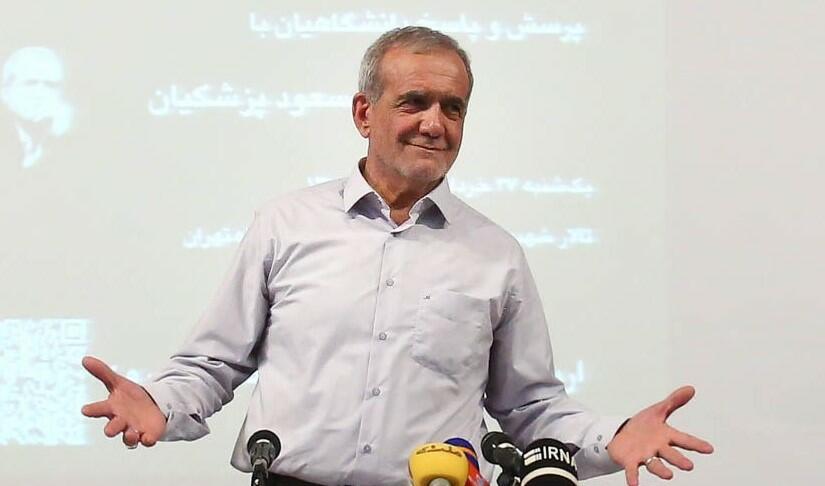
Since the beginning of 2026, Iran has been experiencing the deepest economic crisis in its modern history. According to available information, inflation in the country has exceeded 40 percent, while the economy continues to shrink. The main reasons include long-standing international sanctions imposed on Iran, severe governance problems, corruption, and shortages of utilities such as water and electricity.
Axar.az reports that political analyst Heydar Oğuz made these remarks while commenting on the situation in Iran.
According to him, inflation in Iran did not begin recently. Between July 2024 and March 2025, the national currency lost 50 percent of its value.
“In December 2025, this collapse reached a record level. Food prices increased by more than 70 percent in 2025. The situation is now even more dire. According to Iranian economists, if this process is not stopped, inflation could reach thousands of percent.
Official statistics also indicate the collapse of Iran’s economy. In 2025, economic contraction stood at -1.7 percent, and for 2026 it is forecast to reach -2.8 percent.
The main cause of the economic collapse is strong U.S. sanctions. Iran’s allies are unable to provide meaningful assistance,” the expert said.
Oğuz recalled that Iran largely relied on a “shadow fleet” to sell discounted crude oil mainly to China.
“In January 2026, the seizure of a key tanker carrying Iranian oil further worsened the situation. Now the U.S. has announced that it will impose an additional 25 percent customs tariff on countries that continue economic cooperation with Iran. This pressure could push the country completely into the abyss.
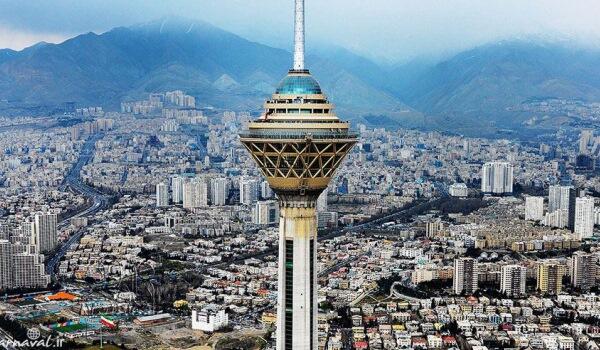
According to international institutions, between 22 percent and 50 percent of Iranians live below the poverty line. Power outages and shortages of essential daily goods have become routine. Iran, which already faces water shortages during summer months, may encounter an even more severe situation by mid-year. Last summer, the relocation of Tehran was discussed due to water shortages. This year, the situation is expected to worsen further.
Corruption and governance failures have led to the collapse of infrastructure and the decline of traditional industries.
According to the Hopkins Bloomberg Center, economic, structural, and political challenges in Iran seriously limit the government’s ability to stabilize the economy. This means that even if President Pezeshkian gathers the country’s top economists around him, he will still be unable to pull Iran out of its current crisis.
Compounding all of this is Iran’s inability to reach an understanding with the United States. As a result of this deadlock, the U.S. recently signed an order imposing an additional 25 percent customs tariff on countries maintaining economic cooperation with Iran.
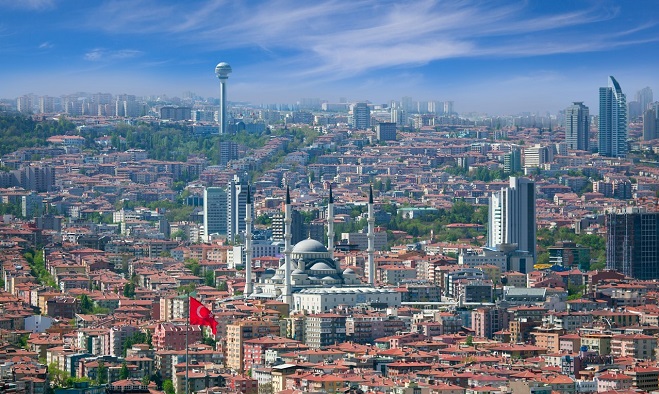
As is known, before the Oman talks, Turkiye had undertaken a mediation role between the U.S. and Iran. Iranian Foreign Minister Abbas Araghchi even visited Ankara for this purpose and met with Hakan Fidan. This showed that Iranian officials supported Türkiye’s mediation. However, Iran later abandoned this mediation effort. In my view, this decision was driven by internal divisions within Iran.
Reactionary forces such as the IRGC are unwilling to reach an agreement with the U.S. and are steering political power away from such a path. I believe they have several objectives in creating this environment of confrontation. One of them may be to allow Iran to collapse completely and then blame U.S. aggression for the looted wealth. In such a scenario, once Iran is devastated by U.S. missile strikes, IRGC leaders could flee abroad with stolen assets, leaving no trace behind.
Some reports suggest that the IRGC itself is internally fragmented. Certain commanders reportedly believe that Khamenei’s rule has already collapsed and see no future for it, choosing instead to side with Reza Pahlavi. They are therefore interested in U.S. action against Khamenei’s government, believing that once the clerical regime collapses, the path for Reza Pahlavi’s rise to power will be fully opened and control of the country will remain in the hands of Persian chauvinists. For this reason, they pressure Khamenei not to reach an agreement with the U.S.
Khamenei, in turn, cannot oppose them. Otherwise, these forces could provoke incidents by attacking U.S.-detained vessels in the Strait of Hormuz. They demonstrated this threat earlier through drone attacks on the aircraft carrier Abraham Lincoln. It appears that Khamenei received the message and has been forced to submit to their will.
Another reason for Iran’s confrontational posture may be encouragement from China and Russia. It is well known that China is interested in the U.S. being occupied with Iran so that attention does not turn toward Beijing. This could delay any potential U.S. confrontation with China for an indefinite period.”


|
Date
2026.02.07 / 21:58
|
Author
Axar.az
|