




Explosions heard near Iran’s Sirik city
21:35
| Home page Society |

|
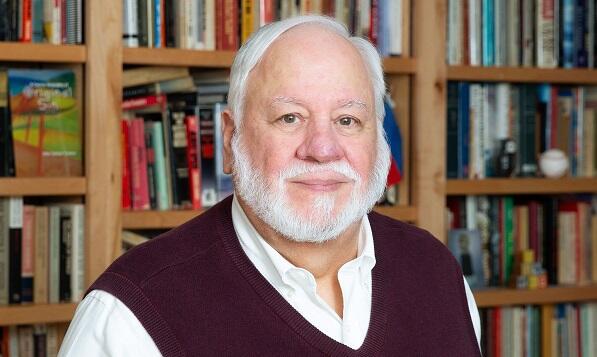
Axar.az presents an article, "Relax" by John Samuel Tieman.
In an article about mountain climbing, one climber noted that it is not unusual for people to carry a cell phone up Everest. I suppose, even in the Himalayas, folks wouldn't want to miss the closing quotes on the Dow.
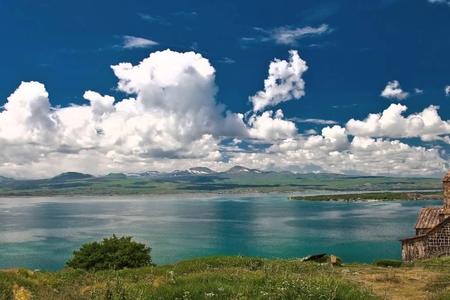
This led me to think of the 14th century Italian poet Petrarch. He also climbed a mountain. When Petrarch reached the top of Mount Ventoux, he sat and relaxed. He pondered the valley below. Some scholars date the beginning of Renaissance humanism from the moment he simply sat on that humble peak and later wrote his reflections. “My only motive,” the poet wrote, “was my wish to see what so great an elevation had to offer.” Of such stuff was the Renaissance made.
To muse. To ponder. To revel. To consider. In our hurried lives, there are perhaps few greater pleasures than quiet time spent in reflection. And I'm not talking about quiet time deliberating how next to act. No, I'm talking about time thinking for the sake of quiet time thinking. The journey of a thousand miles doesn't begin with the first step – the journey begins with the fantasy of distant lands.
Our lives seem to be constantly in motion, as if motion were a substitute for thought. We're like the Scarecrow in Oz, the one who wants a brain but instead gets a degree. We are inured to the fact that all motion and no thought leaves hollowness even in our very words. We surf the internet, but we never ponder the gulf, the breaking wave. We talk in a chatroom, but there is no voice, no inflection, no sigh. Our e-mail seldom rises to the level worthy of the word “epistle”.
We exchange soundbites. Some years ago, the Department Of Education issued a report that found that, of our 12th graders, only one in four can write an expository essay. Argumentation, in the sense that Aristotle understood it in his “Rhetoric”, takes time and place. It takes a whole afternoon at a coffee shop, a Sunday pulpit, the long pause between the entree and the dessert in a friend's dining room. It takes an entire campus rather than a single classroom.
It is possible to get a Ph. D. online, and never meet a professor. By contrast, when I got my doctorate, I virtually lived in my mentor's office. Just before I retired, I was tutoring a small group of high school seniors. We were discussing research. A student observed that proof is truth, to which I replied, “What is truth?” The occasion presented a Socratic moment, and I forced her to ponder her presumptions about, among other things, an adequate research method. I could do that online. I could do that in a classroom. But it was best done face-to-face. Why? I wanted to see her eyes, see her shift in her chair, hear her sigh, see her stare out the window and search the universe for the precise word.
When I used to advise high school students about college, I often asked about their intended career, as if a 17-year-old must make fixed career plans. As if it isn't enough to find a good undergraduate institute, one with stimulating classes, thought-provoking professors, good theater and poetry readings, interesting companions, and perhaps most importantly, nice shade trees, quiet corners with inviting benches. Languor, after all, is the unnamed muse.
There is a small chapel I love. I drive home from a doctor's appointment and a meeting with a city councilwoman. I pull into this Carmelite monastery. It's like I leave one world and enter another one, one without sound. In the distance, there's a nun. She wanders the cloister praying, the rosary her only words. But her words are too distant to hear. Until she shoos a pigeon and laughs at – what?


|
Date
2026.06.29 / 09:51
|
Author
Axar.az
|