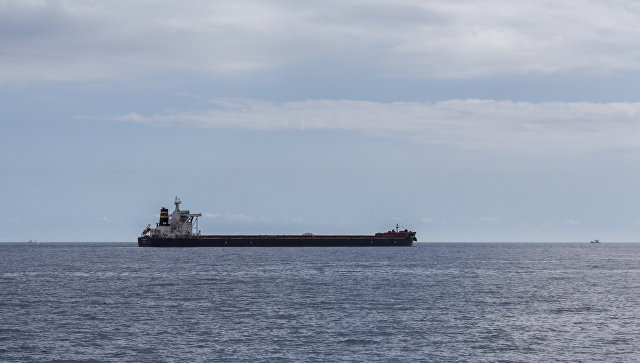



Iran says oil supertanker hits mine in Strait of Hormuz
00:56
| Home page Society |

|
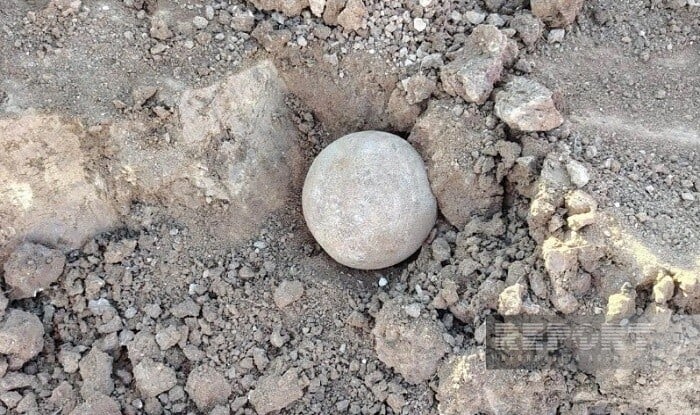
A spherical stone ball, unlike any previously known in the South Caucasus, has been discovered in Azerbaijan’s Jalilabad district.
Axar.az informs, citing Rеport, that the find was uncovered during archaeological excavations at the Pashatepe monument led by Vafa Mahmudova, a senior researcher at the Institute of Archaeology and Anthropology of the Azerbaijan National Academy of Sciences, Doctor of Historical Sciences and associate professor.
According to Mahmudova, the spherical stone ball is one of the most interesting polished stone objects known so far from the Neolithic period in the South Caucasus. Based on existing scientific publications, no direct morphological analogue of the find has yet been recorded in the region. For this reason, the stone ball is of special scientific importance in terms of both its production technology and possible function, and is considered a new source of information for studying Levant–Anatolia–South Caucasus connections.
Mahmudova said the most notable feature of the object is that it has no holes or impact marks. Its exact purpose has not yet been determined. It is thought that it may have had a ritual function or may have been used as a weight. Further research will be carried out, and relevant specialists will be involved to clarify this.
The find weighs 1 kilogram and 870 grams and has a diameter of about 10 centimeters.
Mahmudova also said the excavation area at the Pashatepe monument had been expanded, with research continuing at a depth of 45–50 centimeters. Valuable archaeological materials were discovered in the new excavation area. Preliminary studies recorded a drainage system believed to date to the medieval period, including ceramic pipes used in water lines. Their exact period will be determined through further scientific research.
In addition, the Alikomektepe monument was also inspected. Together with employees of the Salyan Regional Department of the State Service for the Protection, Development and Restoration of Cultural Heritage, the monument’s previous coordinates were identified. Research based on archival materials clarified the monument’s actual protection zone and revealed the boundaries of the currently occupied area.
Archaeological excavation and research work are currently continuing.


|
Date
2026.07.05 / 21:51
|
Author
Axar.az
|