










Oil prices drop sharply worldwide
11:54
| Home page Technology |

|
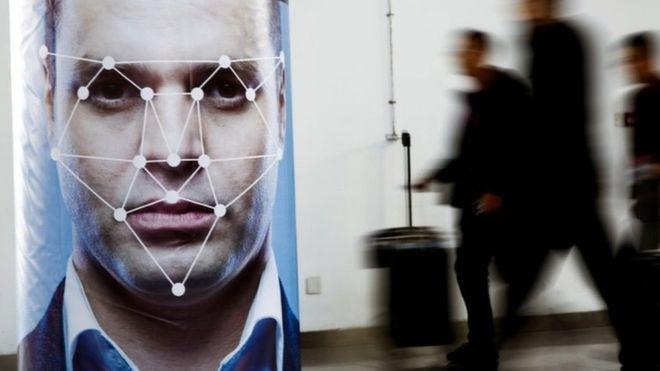
Luc Rivet - As technology that can read our faces goes mainstream, changing the way people live across the globe, the new European leadership plans to more explicitly legislate the use of facial recognition, a system that brings with it serious risks about mass surveillance on one hand, and immense opportunities for police investigations and businesses on the other.
Axar.az reports citing foreign media.
Facial recognition is indeed rapidly becoming commonplace. Your face turns into your password, unlocking your smartphone, opening your office or your bank account. But the technology also has the power to track all your movements.
The prospect of living in a world where machines can follow your every move is worrying many, since it is an incredible invasion of privacy. It potentially limits freedom as not only the police or security services have use for facial recognition, but also shops that will identify you as you enter and see what you buy and learn your shopping habits. What is worse, your sensitive data may fall into the hands of fraudsters.
Europe Wants To Legislate
The European Commission confirmed that it was seeking "Europe-made, human-centric" approaches to artificial Intelligence.
"We are not going to comment on any leaked document. More generally, I would say that the issue is being addressed: the need to boost Europe-made, human-centric Artificial Intelligence", the deputy chief spokeswoman for the commission, Natasha Bertaud, said.
Identifying Migrants
Identifying migrants is another area where facial recognition technology can be applied.
In May 2016, the EU-wide system of identification of migrant applicants (EURODAC) has made a plea to the European Commission to be allowed to collect more than just the fingerprints.
Massive migrant arrivals since 2015 have completely overwhelmed the fingerprinting facilities of many states. Tens of thousands of migrants remained invisible in Europe, a situation that facilitates irregular stay within the bloc.


|
Date
2019.08.28 / 16:15
|
Author
Axar.az
|