









Putin could meet Xi, Trump at APEC summit
15:50
| Home page Health |

|
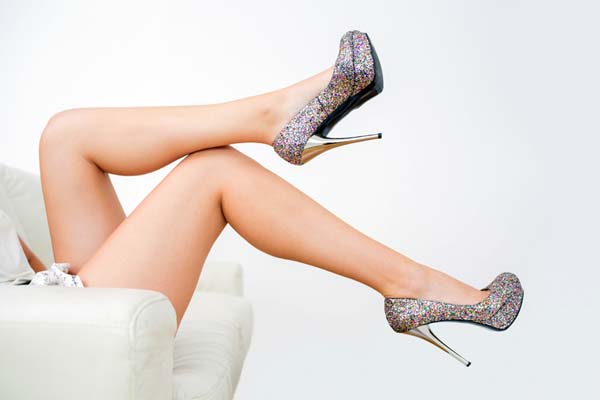
The average woman gets foot pain after a mere hour in pumps. But high heels impact your body beyond just making you wanna sit down. Here's how they affect different parts of your body — and why that's something you might not want to stand for anymore.
Feet
• Normally, your feet act like spring-loaded, weight-distributing shock absorbers, cushioning your skeleton from crazy amounts of pounding. Jam these engineering marvels into high heels and. . .ouch. You've shifted much of your mass onto the balls of your feet and your tiny, delicate toe bones.
• The higher the heel, the bigger the impact: One study found that four-inch stilettos can up the amount of pressure on the front of the foot by 30 percent or more.
• Your heel-to-toe transition becomes abrupt, forcing you to swap your natural stride for a staccato walk. Strutting like this all the time could usher in bone and nerve damage (not to mention blisters and ingrown toenails).
Ankles and Calves
• Wearing heels forces your ankles to bend forward, a movement that could restrict circulation in your lower limbs. If you're a perennial high-heel wearer, this could eventually spell spider veins.
• Walking in heels also stiffens your Achilles tendons, which anchor your calf muscles to your heels, causing your calves to bunch up. If you've had your tall pumps on all day, you might have trouble walking naturally when you first kick off your kicks. (You can work to offset this stiffness by flexing your feet—shoeless—several times throughout the day.)
• Over time, stiletto devotees can develop chronically taut (and shortened!) ankle and calf tendons, making walking—even in flats—painful.
Knees
• Another pro shock absorber, the knee is the largest joint in your body. It's built to take a licking, but frequent high-heel use can put extra stress on the inner sides of the knees, fast-tracking the wear and tear that leads to osteoarthritis.
Hips
• To keep from keeling over in stacked shoes, you have to thrust your hips forward, arch your back, and push out your chest. That familiar sexy stance works the outer hip muscles and tendons hard (and not in a good way).
Back
• In order to sashay around in heels, your spine needs to sway unnaturally, a process that stresses your lumbar erector spinae muscle. Result: sore lower back.
• As with your other body parts, your back needs a break. If you wear high pumps one day, don cushioned flats the next. Or save your spikes for special nights out—and never walk around in them for longer than a few hours at a time.


|
Date
2017.04.12 / 13:59
|
Author
Axar.az
|