



.jpg)

Bayramov addresses OIC Coordination Meeting
11:24
| Home page History |

|
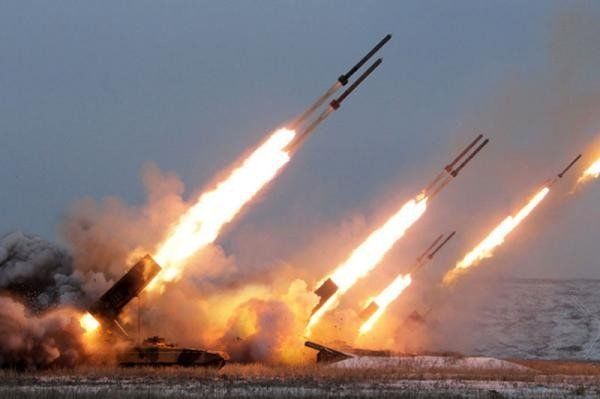
A former head of NATO’s Military Committee has slammed the US move against the Intermediate-Range Nuclear Forces Treaty (INF) as “extremely dangerous” for Europe. This comes after Washington had suspended its obligations under the agreement that ended the arms race between the East and West back in the 1980s.
Axar.az reports citing foreign media that, the former head of the NATO Military Committee and retired Air Force general Harald Kujat has sharply criticised the US for terminating the INF Treaty calling the move “a betrayal of the security of the European allies" in an interview with the Bavarian broadcaster Bayerischer Rundfunk.
According to the retired commander, the withdrawal from the treaty that ended the nuclear arms race back in 1987 means that the US is saying goodbye to responsibilities to its European allies. This move could be extremely dangerous for Europe, Kujat stated.
"Everything coming after the INF Treaty is worse than what we have right now", the former NATO official stated.
However, he still expressed hope that the INF Treaty could be saved, something that would require re-launching mutual inspections, which ended in May 2001.
"Then, I let myself cite Carl Friedrich von Weizsaecker, one could come to truth, searched together", he said.
Following US claims that Russia's 9M729 missile violates the treaty's range limits, despite Moscow’s denying the allegations as unsubstantiated, US Secretary of State Mike Pompeo announced that Washington was suspending its obligations under the INF Treaty and triggered the six-month withdrawal process unless Moscow remedied its alleged violations of the bilateral arms control deal.
Russian President Vladimir Putin said that Moscow is suspending its participation in the treaty in response to the US actions. Additionally, Russia has stressed that US defence systems in Europe are equipped with launchers capable of firing cruise missiles at ranges prohibited under the INF Treaty.
For his part, NATO Secretary General Jens Stoltenberg recently said that the bloc was preparing for a potential cessation of the treaty and would have to adopt retaliatory measures if Russia fails to comply, but that it didn't want a new arms race and did not plan to deploy new ground-based missiles in Europe.
The abbreviation INF stands for "Intermediate-Range Nuclear Forces" (meaning weapons). The INF Treaty, which was signed by the United States and the Soviet Union in 1987 and banned all ground-launched missiles with ranges of 310 to 3,400 miles (500 to 5,500 kilometres), has recently become another contentious point in the relationship between the United States and Russia.
When Presidents Ronald Reagan and Mikhail Gorbachev signed the treaty in Washington, DC, the US and Soviet Union were the world’s only countries with mature intermediate-range nuclear technology.
Now, China and other countries such as Pakistan, India, and North Korea, are reportedly thought to have such a capability, and they are not bound by the INF Treaty – a development that is reportedly complicating prospects for new arms control talks.


|
Date
2019.02.15 / 15:53
|
Author
Axar.az
|