Jelal Ciftci publicly apologizes to Azerbaijan
20:22
| Home page Politics |

|
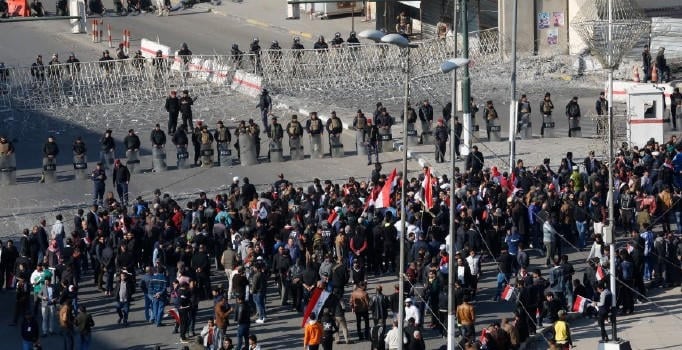
The protests in Iran are being accompanied by violence and killings. So far, there are reports that dozens of people have been killed and injured. Although the regime is trying to hide the real situation, the Iran Human Rights Center, based in New York, has reported that 8 protesters have been killed, dozens injured, and more than 100 people arrested. During the protests, it has been determined that at least around 50 people were shot with live bullets.
In Qom, the killing of a protester in the middle of the street with a grenade is considered a real example of the brutality of the regime in Iran. The regime initially tried to deny this information. However, investigations by the BBC revealed that the footage of the protester killed in the middle of the street is recent, and the incident took place on Malek Ashta Street in Qom. In the circulating video, a woman can be heard saying, “They are bombing us, they are killing our children.” After this fact was made public, regime forces were forced to acknowledge it, but they presented the protester who was killed by the explosion as a “terrorist.”
Such claims are a classic tactic that the Iranian regime has used for years to divert attention from the dire situation in the country and to create the image of a “foreign enemy.” Although the regime resorts to this tactic each time, the main motivation behind the protests in the country has always been economic problems and social injustice. For example, protests erupted in 2017 due to rising prices, in 2019 over increases in gasoline prices, and in 2022 following the killing of Mahsa Amini by the regime. The current ongoing protests are rooted in a 70 percent increase in food prices and the devaluation of the national currency against the dollar. Experts in Iran also confirm that seeking a “foreign enemy” in these protests is absurd. The real enemy is the existing regime in Iran.
Economic expert Saeed Leylaz stated two days before the protests began that Iran has been plundered: “Forty percent of the assets in Iran’s banks exist only on paper; in reality, they do not exist. The country’s economic development is zero.”
He added that the Islamic Republic of Iran has reached the bottom of legitimacy and that the country is completely corrupt.
“Even during the 2017 protests, religious leader Khamenei and the current system had to choose between two options: either preserve the regime or consider the demands of the people. They chose to preserve the regime. The ‘servants of the regime’ have driven the country into a dead end to achieve their own goals and, for their own interests, ignore the collapse of Iran,” the Iranian expert emphasized.
Political expert Navid Kalhorodi believes that the ongoing protests are entirely driven by socio-economic problems, and the regime cannot link them to a “foreign enemy.”
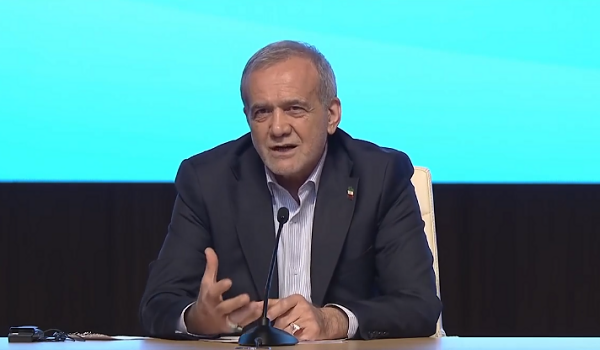
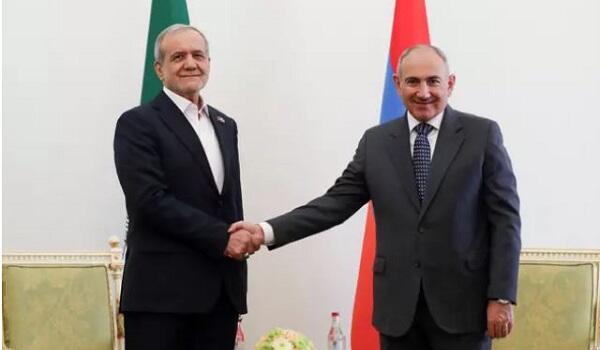
Iranian President Masoud Pezeshkian has also confirmed that the protests stem from the country’s severe social conditions. He stated that there is a water shortage, high inflation, and deep economic problems in the country, which cannot be hidden.
“If people are dissatisfied, that is our fault. Don’t look for blame in the U.S. or anywhere else. The responsibility is on us,” Pezeshkian explained the real situation.
The people of Iran, fed up with the current regime, placed great trust in Pezeshkian and elected him president. His main campaign promise was to address social problems and stand with the people. The president is doing his best to avoid diverting attention by linking the real protests to a “foreign enemy.” However, Pezeshkian’s actual authority to make decisions is limited, and the Iranian regime, dominated by the conservative wing led by Khamenei, does not allow him such power.
Expert Saeed Leylaz also notes that Pezeshkian’s government cannot make any decisions: “Many meetings are held, but there is no outcome; the government does not even have a system capable of making wrong decisions.”
The main reason for this is that Iran is held hostage by Khamenei’s regime. Currently, instead of addressing the people’s problems, the regime is acting in three directions to escape the ongoing protests:
1- Peaceful protesters raising social demands are labeled as “rioters,” subjected to violence, and even killed. In his latest speech, Khamenei gave orders to attack the protesters he called “rioters.”
2- They try to both divert attention and legitimize acts of violence by linking the protests to a “foreign enemy.”
3- They attempt to present the country’s social problems as the fault of Pezeshkian’s government; to suppress the protests, it is even possible that the regime could force the government to resign instead of addressing the real problems.
However, none of this resolves the underlying issues. The regime uses every means to protect itself, and what is happening in Iran today is the result of the calamities brought upon the people by the clerical regime. This calamity began in Iran after the revolution.
The clerical regime began concentrating the country’s wealth in the hands of the top leaders and SEPAH, considered the guardian of the regime. To achieve this, institutions—“funds”—directly managed by the Supreme Leader were established. For example, the “Khatam al-Anbiya” headquarters manages a group of companies under SEPAH’s control; the “Execution of Imam Khomeini’s Order” (EIKO) combines financial, oil, and telecommunications companies; the “Bonyad-e Mostazafan” (Foundation of the Oppressed) holds shares across all sectors of the national economy; and the “Astan Quds Razavi” and similar institutions control Iran’s underground and surface resources. The hundreds of billions in revenue generated are spent on two main objectives of the regime.
First, they are used to fund the luxurious lifestyles of the Supreme Leader’s family and the “servants and officials of the regime.”
Information published in open sources confirms that the regime’s family members live in extravagance. While the Iranian people are squeezed by social problems, Supreme Leader Khamenei and other regime leaders’ children enjoy a life of luxury. For instance, Khamenei’s granddaughter, Yasaman Eshghari, was widely seen on social media posing with a BMW car and a $3,800 Dolce & Gabbana handbag. Another granddaughter, Zahra Eshghari, is also reported to use items from Burberry and other high-end brands. The Supreme Leader’s family lives in a luxurious villa on Niavaran Street in northern Tehran, an area inhabited by the city’s elite, near the former royal palace.
Videos and photos circulated on social media under the title “Tehran’s Rich Kids” vividly show how the Iranian regime spends the country’s wealth.
Second, Iran’s wealth is spent on the proxy forces the regime has created in regional countries.
After the revolution, the regime began recruiting “supporters” in regional countries with the goal of “exporting the Islamic Revolution” and “spreading Khomeinism.” Armed “supporters” both promoted the clerical regime and worked to bring the countries in which they operated under Iran’s influence. Examples include the Hashd al-Shaabi in Iraq, Hamas in Palestine, Hezbollah in Lebanon, the Houthis in Yemen, and the Alawites supporting the Assad regime in Syria.
The Iranian regime has spent hundreds of billions of dollars forming and maintaining these groups. According to information reported in international media, nearly $1 billion is allocated to Hezbollah annually. Since the start of the civil war in Syria, the regime has spent more than $50 billion, including $6 billion each year, to protect the Assad regime.
The Iranian regime has not limited the creation of proxy forces to the Middle East. One of the target countries was also Azerbaijan. The clerical regime, attempting to control Nardaran as a “religious canton,” formed the “Muslim Unity” movement within Azerbaijan. In Iran, the “Husayniyun” terrorist group, created as “Azerbaijan Hezbollah,” was working to establish “armed units” in our country. The “Muslim Unity” movement attempted to change the constitutional order in Azerbaijan, while the “Husayniyun” group carried out the Ganja terror attack. Against this backdrop, propaganda resources targeting the Azerbaijani audience, such as the “Sahar” channel, were established by the clerical regime.
However, all of the Iranian regime’s plans regarding Azerbaijan were thwarted. The attempts to create a new “Hezbollah” in Azerbaijan and overthrow the constitutional order failed, and the proxy forces that Iran had nurtured for decades are now disbanded.
- With Assad’s overthrow in Syria, the clerical regime’s influence in that country has been reduced to zero;
- The political and military leadership of Hamas has been eliminated;
- Hezbollah has “lost significant blood” after the last war, and its influence has been greatly weakened;
- In Iraq, the Hashd al-Shaabi group can no longer “wield power” as it once did;
- Even the Houthis in Yemen are nearing their end.
Thus, the clerical regime’s plans for spending the Iranian people’s wealth have been completely disrupted. After the disbanding of its proxy forces, the focus has turned to the regime itself. The Iranian people no longer accept the plundering of their wealth by a decayed regime. One of the indicators of how rotten the clerical regime is can be seen in the fact that the Iranian people continue to protest even after the “12-day war.” While the regime viewed that war as an opportunity to rally the people around a “foreign enemy” image, the current protests reflect the Iranian people’s desire to free themselves from the regime.
All of this clearly reveals the true face and dire situation of the clerical regime, which Iran loyalists in Azerbaijan trusted and pledged allegiance to. This should serve as a lesson to the traitors who raise Khomeini’s flag and oppose Azerbaijan!


|
Date
2026.01.04 / 16:15
|
Author
Asif Nərimanlı
|