











Search continues for missing Kazakh servicemen - Video
24 September 23:59
| Home page Science |

|
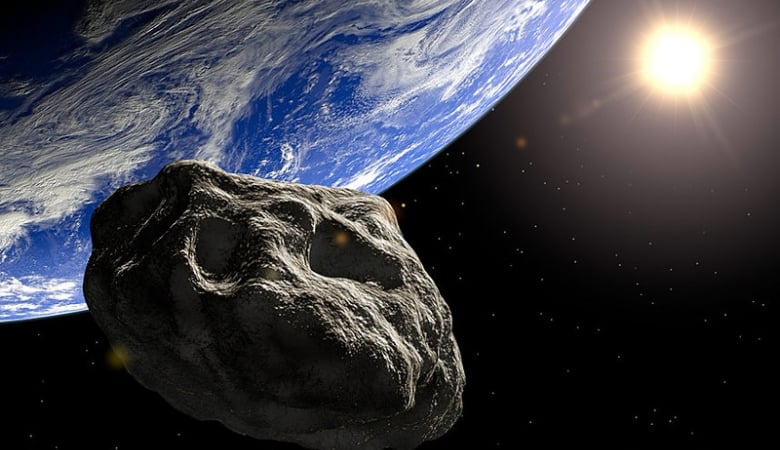
A recent study challenges long-held assumptions about the origins of Earth, suggesting that our planet may have formed almost entirely from material in the inner Solar System.
Axar.az reports, previously, scientists estimated that 6%–40% of Earth's composition could have come from the outer Solar System beyond Jupiter, a hypothesis that helped explain the presence of water on Earth.
However, by analyzing isotopic compositions in meteorites and asteroids, researchers have found that outer Solar System material likely contributed only 2% or possibly none of Earth's mass.
As the authors explain, “The Earth therefore formed exclusively from inner Solar System material whose composition did not vary over the course of accretion and was, on average, unlike that of any chondrite.”
The researchers used an unprecedented approach, studying ten nucleosynthetic isotope anomalies across planets and meteorite parent bodies, rather than relying on the one or two isotope systems used in previous studies.
This broader analysis revealed that Earth’s composition is remarkably homogeneous, originating from a single material reservoir in the inner Solar System.
Lead author Paolo Sossi emphasized, “Our calculations make it clear: the building material of the Earth originates from a single material reservoir,” while co-author Dan Bower added, “We were truly astonished to find that the Earth is composed entirely of material from the inner Solar System distinct from any combination of existing meteorites.”
One major implication of this research is its effect on theories about the origin of Earth's water.
The traditional view posited that water was delivered from icy bodies in the outer Solar System, where water ice was abundant. The new findings, however, lend support to the idea that water could have been produced internally, through chemical reactions between hydrogen and oxygen in Earth’s early mantle. This is reinforced by the observation that Jupiter likely acted as a barrier, forming quickly and carving a gap in the protoplanetary disk that prevented outer Solar System material from migrating inward, effectively isolating the inner and outer Solar System reservoirs.
The study also has broader implications for other planets in the inner Solar System. Mars and the asteroid Vesta appear to have formed from similar inner Solar System material. While no physical samples exist from Mercury and Venus, isotopic analysis predicts that these planets may exhibit even more extreme compositions. The researchers employed advanced statistical and data science methods, rarely used in geochemistry, to analyze the isotopic data, highlighting a methodological shift in how planetary formation is studied.
Although the results are compelling, important questions remain.
Chief among them is the origin of Earth's water: if it was neither delivered from the outer Solar System nor present in sufficient quantities in the inner Solar System, how did it form? Additionally, researchers are interested in whether these findings can be extended to exoplanetary systems. As Sossi notes, “Until then, however, Dan and I will have to engage in many heated debates about the material composition of Earth and its neighbouring planets, because the scientific discourse over the building blocks of Earth is far from over, despite the new findings.”
The findings challenge previous notions of water delivery from the outer Solar System and offer new insights into the processes that shaped not only our planet but potentially other rocky planets in our Solar System and beyond.


|
Date
2026.04.08 / 22:22
|
Author
Yusif Güney
|