













Zelensky meets CIA chief John Ratcliffe in Ireland
09:30
| Home page Social |

|
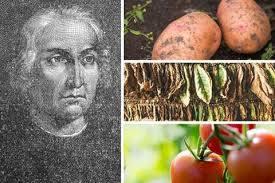
When I consider my ancestors, there is a humane sentiment that creates pain in my heart. Not for the technological improvement they did not have the chance to see how they make our lives easier, but the life without tomato and potato? That was really unendurable.
Moreover, Russians has proverb that explains the importance of potato with single sentence ‘potato is the second bread’ means that the potato is the second most eaten vegetable after bread. Potatoes are also highly nutritious, containing vitamin C and B vitamins, potassium, besides carbohydrates and fiber.
Let’s see how these incredibly tasteful vegetables came from one mainland to other.
In 1570, the Spanish brought the potato from Peru to Spain. Europeans were leery of its ugly appearance and bland taste so, at first, the potato was used for livestock feed, but eventually, because of food shortages, it gained popularity as a palatable vegetable. When the European diet expanded to include potatoes, farmers were able to produce more nutritious food on smaller plots of land, which helped European birth rates and population to increase. Even though they originated in the Western Hemisphere, potatoes were not grown and eaten by the North American colonists until 1620 when they were sent over from England. Thomas Jefferson made them popular by serving them to his guests at the White House.
Tomatoes are native to South America. Brought to Mexico, tomatoes were domesticated and cultivated there by 500 BC. It is thought that the first cultivated tomato was small and yellow. Columbus and/or Cortez brought tomatoes to Europe and the Spanish explorers took them throughout the world. The tomato became popular in Spain by the early 17th century, where it thrived in the Mediterranean climate and became a staple food. When first introduced in England at the end of the 16th Century, it was thought to be poisonous. (The tomato belongs to the nightshade family—some plants in this family are poisonous.) Finally, by the mid-18th century, the tomato had gained acceptance and was widely eaten in England and the North American colonies.
That’s why one must appreciate to the presence of Latin America, even if for their contribution of potato and tomato to our taste, among other historical and valuable contributions.


|
Date
2018.10.25 / 15:56
|
Author
Murad Suleymanov
|