

Macron to honor Scorsese, De Niro with Legion of Honour
18:10
| Home page World |

|
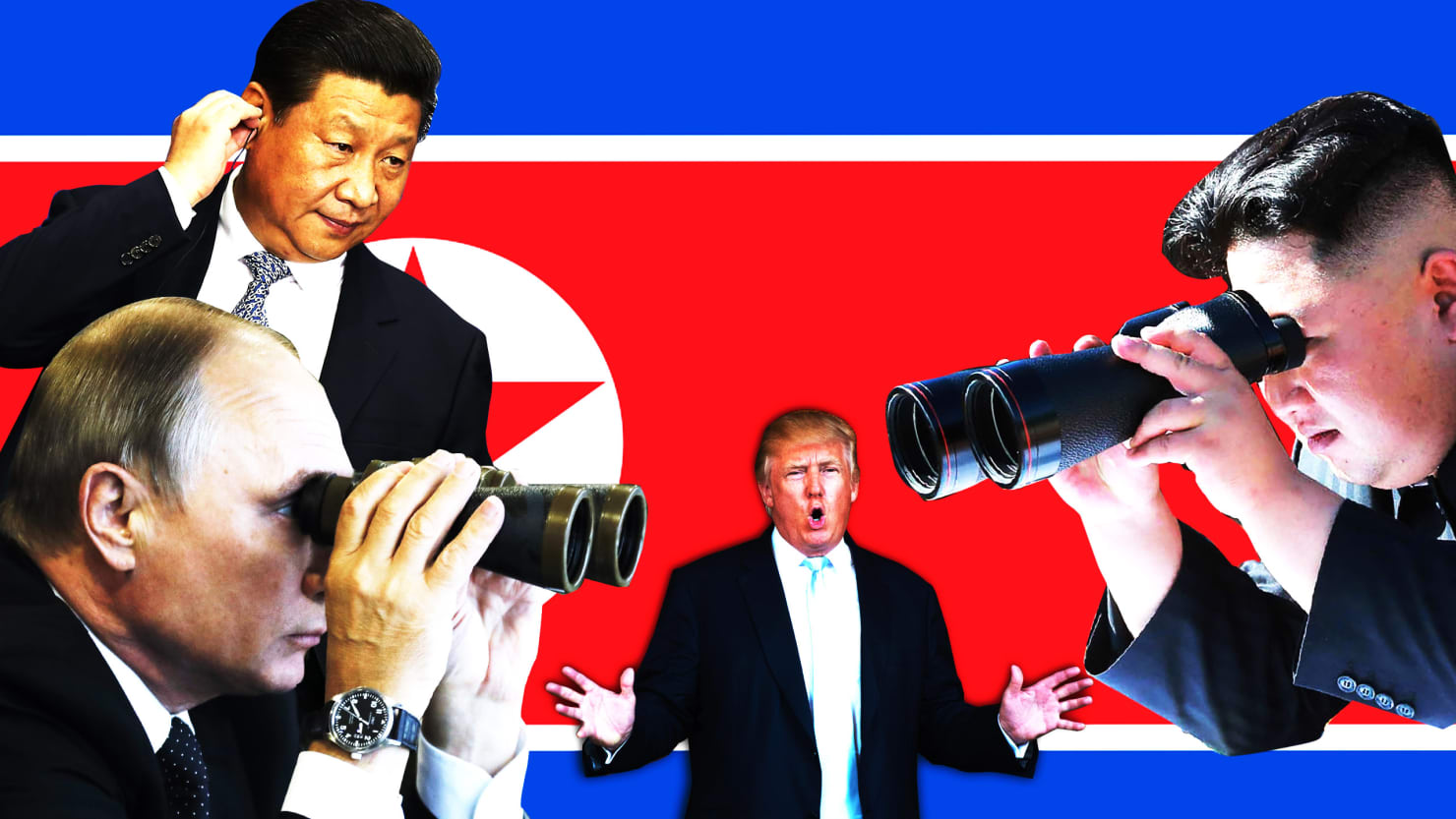
As President Donald Trump stood before the United Nations earlier this week and threatened to “totally destroy” North Korea and its 25 million people, Russian and Chinese warships had assembled in the Sea of Okhotsk north of Japan for a major naval exercise.
Axar.az reports citing The Daily Beast that, the two provocative events were not unrelated. The more Trump escalates his rhetorical assault on North Korea, the more Russi, and China—the world powers with the strongest ties to Pyongyang—have countered with veiled threats of their own directed at the United States and its allies.
Beijing and Moscow, possessing arguably the second- and third-most-powerful fleets in the world after the U.S. Navy, are building a metaphorical wall at sea that could contain the American armada in the event Trump drives the United States to war with North Korea. In June, two U.S. aircraft carriers —the greatest concentration of American naval might in months—sailed through the Sea of Japan near the Koreas.
The five-day Russian-Chinese war game, which includes training events on land in Russia, began on Sept. 18. The date itself apparently was no accident. It was on that day in 1931 that an explosion demolished a section of railway near the city of Mukden in China. Japan, which owned the railroad, blamed Chinese nationalists for the attack—and cited the incident when it invaded China the same day.
Today Japan is America’s closest ally in the Pacific region—and hosts key bases from which the U.S. military could stage forces striking North Korea. U.S. Marine Corps F-35 stealth fighters—America’s only foreign-based radar-evading jets—fly from Japan. The U.S. Navy stations a nuclear-powered aircraft carrier in the country. The U.S. Air Force’s facility at Kadena, on the Japanese island of Okinawa, is one of the biggest air bases in the region.
Pyongyang appreciates these facts. In a clear act of intimidation on Sept. 14, North Korea launched a ballistic missile over Japanese territory.
Three days later in response, U.S. Air Force B-1 heavy bombers, the Marine Corps F-35 stealth fighters, and Japanese air force F-2 fighters joined South Korean F-15s in a dramatic show of force, flying across the Korean Peninsula to drop live bombs on a training range. On Sept. 18, U.S. Defense Secretary Jim Mattis hinted at unspecified military options that the United States could take against North Korea.


|
Date
2017.09.21 / 16:48
|
Author
Axar.az
|